Story Highlights
- Iran announced via state media that it was suspending U.S.-Iran peace talks in response to Israeli strikes in Lebanon, though Trump insisted negotiations were continuing.
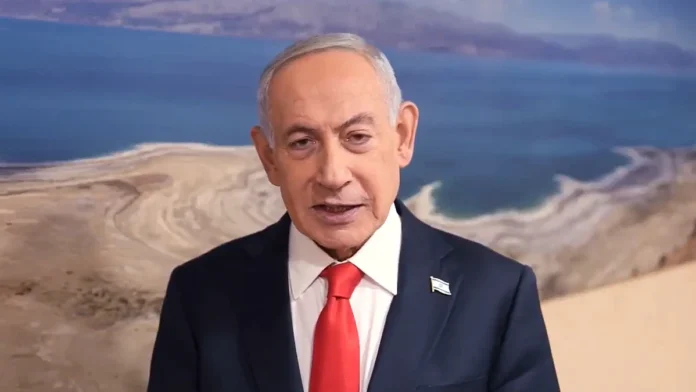
- Trump announced that Israeli Prime Minister Netanyahu had agreed to halt a threatened military advance toward Beirut’s southern suburbs after a direct phone call.
- Hezbollah separately agreed to a U.S.-proposed framework to halt strikes on Beirut, though sporadic clashes continued in southern Lebanon overnight.
What Happened
Monday began with a sharp escalation in Lebanon, where Israel threatened to advance forces into Beirut’s southern suburbs — a Hezbollah stronghold — in what Israeli officials framed as a continuation of military pressure. Iranian state media linked to the Islamic Revolutionary Guard Corps announced that Tehran was suspending its indirect negotiations with the United States, citing what it described as ongoing ceasefire violations by Washington and its allies. The announcement sent shockwaves through diplomatic channels and raised fears of a full collapse of the fragile pause in major hostilities.
President Donald Trump moved quickly to contain the fallout. He told an NBC reporter that he had not heard from Iran and stated on Truth Social that indirect talks were continuing at a “rapid pace,” pushing back on the Iranian announcement. Hours later, he spoke directly with Israeli Prime Minister Benjamin Netanyahu and secured what he described as a significant concession: that Israeli forces would not enter Beirut, and that troops already moving in that direction had been “turned back.” Trump posted on Truth Social that “there will be no Troops going to Beirut,” signaling a direct intervention in Israeli operational planning.
At roughly the same time, Trump announced that Hezbollah had agreed to a U.S.-proposed framework to halt strikes on Beirut. The announcement came after Trump told ABC News he believed a broader deal to reopen the Strait of Hormuz and formalize the ceasefire with Iran was reachable “over the next week.” A regional source confirmed to CNN that negotiations with Iran had resumed following the momentary suspension.
Throughout the evening and into early Tuesday, hostilities continued at a lower level in southern Lebanon. Hezbollah claimed a rocket attack on an Israeli tank in the town of Hadatha. The Israeli military said it intercepted two projectiles from Lebanon without casualties. Lebanon’s national news agency reported Israeli strikes on several villages in the south. Despite these flareups, diplomatic officials characterized the overall trajectory as cautiously stabilizing.
Why It Matters
The rapid series of Monday’s events illustrated the degree to which the United States has become the central managing power in an active multi-front conflict involving Iran, Israel, Hezbollah, and Lebanese civilian populations. Trump’s direct intervention with Netanyahu to halt the Beirut advance was a significant exercise of American diplomatic leverage — and demonstrated both the closeness and the friction in the U.S.-Israel relationship at a moment of maximum operational tension.
The suspension and quick resumption of Iran negotiations also highlighted how fragile the ceasefire architecture remains. The entire framework is sustained by a combination of deterrence, active diplomacy, and a set of incentives — including the possible reopening of the Strait of Hormuz — that have not yet been formalized. Any single military incident can destabilize the diplomatic environment and threaten a return to large-scale conflict. The pace of events on Monday alone illustrated how narrow the margin for error is.
For American audiences, the conflict has immediate implications for energy prices, global trade, and the risk of deeper U.S. military involvement. The Strait of Hormuz carries approximately 20 percent of the world’s oil supply, and its closure or disruption since the conflict began has contributed to energy price volatility in U.S. markets. A durable deal that reopens the strait would be one of the most economically significant diplomatic outcomes of Trump’s presidency.
The domestic political stakes are also significant. Trump faces criticism from both directions: from voices on the right, including former allies, who oppose any U.S. military engagement in the region, and from more interventionist figures who believe the administration has not moved decisively enough. His posting on Truth Social at 1 a.m. defending his approach and telling critics to “sit back and relax” underscored the pressure he faces from within the political coalition that elected him.
Economic and Global Context
The ongoing conflict in the Middle East has kept energy markets on edge throughout 2026. The Strait of Hormuz, through which a substantial portion of global petroleum flows, has been the subject of active negotiations as part of any ceasefire deal. Disruptions to that passage have contributed to elevated global oil prices, affecting transportation costs, manufacturing inputs, and consumer energy bills in the United States and globally.
The United Nations Security Council, with the exception of the United States, called on Monday for Israel to withdraw from southern Lebanon and refrain from further escalatory action — a sign of how isolated Washington has become in international forums on the conflict. That isolation carries costs for American diplomatic credibility and complicates efforts to assemble broader coalitions for enforcement of any eventual peace arrangement.
Global markets have been watching the Iran negotiations closely for signals about Hormuz. A credible deal would likely produce a significant downward move in oil prices, providing relief to consumers and reducing inflationary pressure on the U.S. economy. The administration has repeatedly pointed to a potential Hormuz agreement as one of its signature economic achievements, though the timeline has shifted multiple times.
Implications
If Monday’s stabilization holds and talks with Iran do resume in earnest, the administration faces the harder task of converting a fragile ceasefire into a durable and enforceable agreement. Trump suggested a deal could come within a week, though similar projections have been made before without resolution. The specific elements of any deal — including the terms of Hormuz access, Iran’s nuclear posture, and the status of Hezbollah — remain deeply contested.
The episode also raises questions about the durability of the U.S.-Israel relationship under current conditions. Trump’s decision to intervene directly to halt Israeli military movement toward Beirut was an unusual act of restraint on Washington’s part, and it remains to be seen whether Netanyahu will comply over the longer term or whether similar confrontations will recur. The strength of that bilateral relationship is a central variable in whether any broader regional settlement is achievable.
For the American public, the coming weeks will test Trump’s claim that his approach to the conflict is working and that patience will yield results. Approval ratings already reflect public skepticism, and a return to major hostilities would be a severe political blow heading into midterm season.
Sources
“June 1, 2026 – Trump insists talks continue after Iran suspended negotiations”