Story Highlights
- NASA releases new visuals from Artemis II mission preparations
- Milestone signals progress toward returning humans to the Moon
- Mission strengthens U.S. leadership in space exploration
What Happened
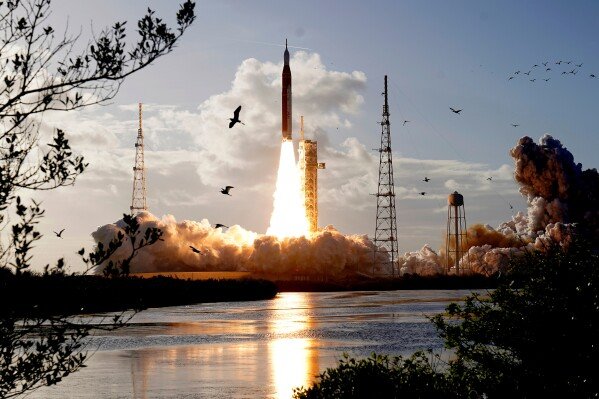
NASA has released new images and updates related to its Artemis II mission, offering a closer look at the progress being made toward returning humans to the Moon. The visuals showcase key components of the spacecraft, astronaut training efforts, and mission preparations, highlighting advancements in technology and planning. Artemis II is expected to be the first crewed mission in NASA’s Artemis program, designed to orbit the Moon and pave the way for future lunar landings.
The newly shared materials provide insight into the spacecraft systems and the extensive preparation required for human spaceflight. Astronauts involved in the mission are undergoing rigorous training, including simulations and testing designed to prepare them for the challenges of deep-space travel. The updates also emphasize the role of collaboration, with contributions from international partners and private sector organizations playing a key part in the mission’s development.
This mission builds on the success of Artemis I, which completed an uncrewed journey around the Moon. Artemis II represents the next step, transitioning from testing to human involvement. The release of these visuals serves both as a progress update and as a way to engage public interest in the mission, reflecting NASA’s ongoing efforts to communicate its achievements and goals.
The timeline for Artemis II continues to evolve as testing and preparations progress. While exact launch dates may be subject to adjustments, the mission remains a central focus of NASA’s long-term exploration strategy. The latest updates indicate that the program is moving forward steadily, with key milestones being achieved.
Why It Matters
The Artemis II mission is significant because it represents a major step in the United States’ efforts to return humans to the Moon after several decades. Human spaceflight beyond low Earth orbit presents unique challenges, and each stage of preparation is critical to ensuring mission success and safety.
The program also has broader implications for scientific research and technological innovation. Missions like Artemis II contribute to the development of new technologies that can be applied in various fields, from engineering to communications. The knowledge gained from these missions can support future exploration, including potential journeys to Mars.
Additionally, the mission highlights the importance of international collaboration in space exploration. Partnerships with other countries and organizations allow for shared expertise, resources, and capabilities. This collaborative approach can enhance the effectiveness of missions and strengthen global relationships in the field of space science.
Public engagement is another key aspect. Space missions often capture the imagination of people around the world, inspiring interest in science, technology, engineering, and mathematics (STEM). The release of new visuals helps maintain this interest and provides a tangible connection to the mission’s progress.
Political and Geopolitical Impact
The Artemis II mission also carries geopolitical significance. Space exploration has long been a domain where technological capability and national ambition intersect. Progress in this area can influence global perceptions of leadership and innovation.
For the United States, the Artemis program reinforces its position as a leading force in space exploration. Demonstrating the ability to conduct complex missions beyond Earth orbit enhances credibility and influence in international space initiatives. It also sets the stage for future collaborations and agreements.
Other countries are closely monitoring developments in the Artemis program. As space becomes an increasingly important क्षेत्र for both scientific and strategic interests, advancements by one nation can prompt responses from others. This dynamic can lead to both competition and cooperation, shaping the future of space exploration.
Domestically, the mission reflects ongoing investment in science and technology. Government support for space programs can influence economic activity, job creation, and innovation. The Artemis program, in particular, involves a wide range of industries and organizations, contributing to its broader impact.
Implications
The continued progress of Artemis II suggests that the United States is moving closer to achieving its goal of returning humans to the Moon. Success in this mission would lay the groundwork for future lunar exploration and potentially more ambitious projects, such as missions to Mars.
However, challenges remain. Human spaceflight is inherently complex, and ensuring safety and reliability requires ongoing testing and refinement. Delays or adjustments to the timeline are possible as NASA works to address these challenges.
In the long term, the Artemis program could play a key role in shaping the future of space exploration. It may lead to the development of new infrastructure, such as lunar bases, and contribute to a deeper understanding of space environments. The mission represents both a continuation of past achievements and a step toward new possibilities.