Story Highlights
- Deadly collision shuts down LaGuardia Airport operations
- Two pilots killed, dozens injured in runway incident
- Federal investigators launch urgent aviation safety probe
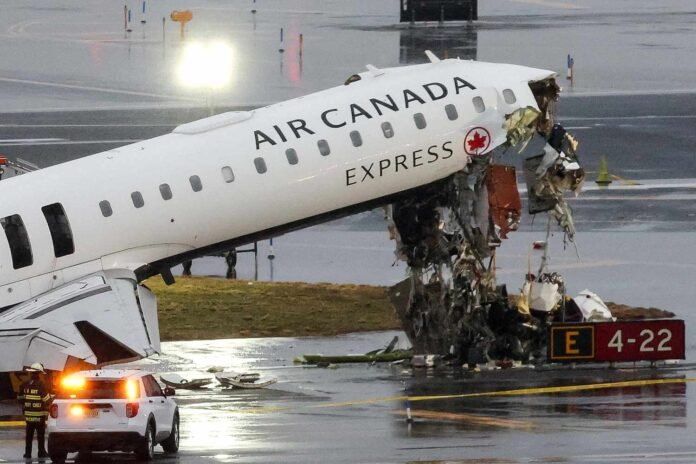
A fatal runway collision at New York’s LaGuardia Airport has triggered a major aviation safety investigation after an Air Canada regional jet struck an airport vehicle during ground operations. The crash resulted in the deaths of both pilots and left dozens of passengers injured, forcing authorities to suspend operations at one of the nation’s busiest airports. Emergency crews responded rapidly, evacuating passengers and securing the scene as federal agencies began assessing the cause of the incident.
Initial reports suggest the collision occurred during routine ground movement, raising concerns about communication protocols and runway coordination systems. The incident has drawn immediate attention from aviation regulators, with investigators expected to examine air traffic control procedures, visibility conditions, and operational safeguards. Airport closures and widespread flight cancellations followed, disrupting travel plans and highlighting the cascading impact of such incidents on national air traffic networks.
Beyond the immediate tragedy, the crash underscores broader concerns about airport safety infrastructure and coordination between ground vehicles and aircraft. With increasing traffic at major hubs, even minor lapses in communication can have severe consequences. Authorities are expected to review current safety protocols and consider potential reforms aimed at preventing similar accidents in the future, particularly as air travel demand continues to rise.
Implications
The investigation could lead to stricter safety regulations and procedural changes across U.S. airports. While the aviation industry maintains a strong safety record, incidents like this often prompt system-wide reviews to ensure that operational risks are minimized and passenger safety remains the top priority.